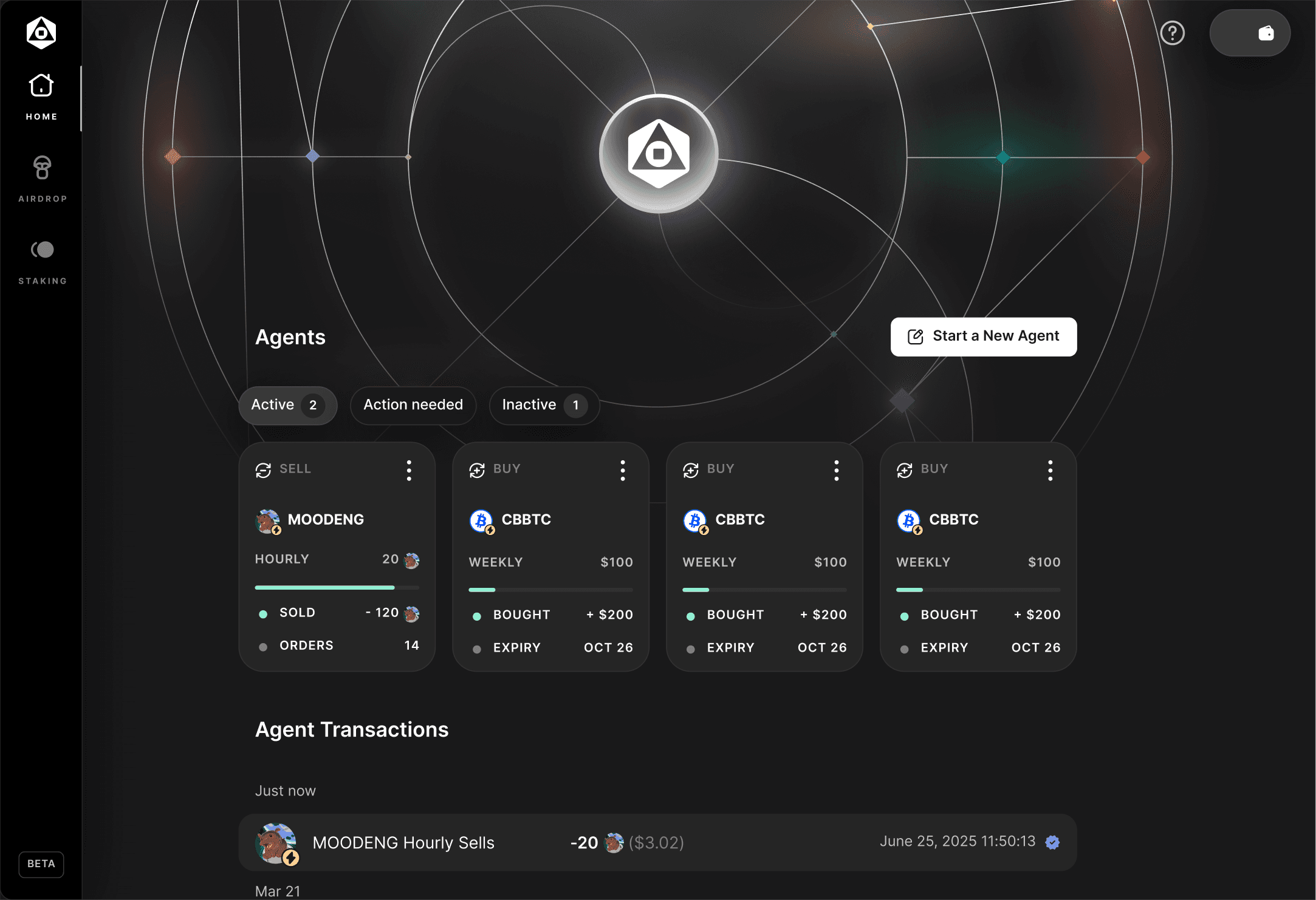
I designed Newton’s first AI agent — transforming abstract blockchain automation into an accessible experience that processed over $1M in transactions within two weeks.
My Role
As the lead designer, I shaped the end-to-end experience of Newton’s first AI agent — from defining the core interaction model to shipping the MVP in collaboration with PM, engineering, and leadership.
My scope included:
Translating the technical concept of “onchain AI agents” into an intuitive, accessible user flow.
Leading a 14-day design sprint to define the MVP scope and align stakeholders.
Prototyping and validating flows through early user feedback on UserTesting.
Overview
At the start of 2025, crypto investors were looking for smarter ways to use AI to manage their onchain assets. Existing solutions, such as trading bots, were overly technical and lacked credibility, leaving users worried about scams.
To solve this, Magic Labs built Newton, a protocol that enables verifiable and automated onchain transactions through AI agents with built-in guardrails.
As the MVP, we designed and launched Newton’s first AI agent on newton.xyz to showcase Newton’s core value propositions: automation, verifiability, and cross-chain capability.
Timeline
March–April: Defined the MVP and shipped the first Newton Agent
May [Pre-TGE]: Airdrop and Staking
June [Post-TGE]: Expansion to Sell Agent, Yield Optimizer Agent, and more
Project Challenges
New domain complexity — First time designing for AI agents and financial strategies like DCA and yield optimization.
Leadership alignment — Needed to drive consensus across co-founders with strong, sometimes conflicting, opinions.
Technical constraints — No true LLM available for the MVP; limited time (14-day sprint); unifying multiple wallet types (smart wallets vs EOAs) in the same platform.
Design Process
Understanding the problem space
I mapped how crypto investors currently use AI — from bots to private trading groups — and identified core pain points: complex setup, lack of transparency, and low trust.Defining the opportunity
Through early sessions with the PM and CEO, we defined Newton’s differentiator as “AI automation with verifiability.” The challenge was to make the agent feel intelligent but never opaque.Framing the MVP experience
I established three guiding principles for design:Simplicity: reduce financial jargon and cognitive load.
Scalability: ensure the design system could extend to future agents (Sell, Yield, etc.).
Transparency: every agent action should be traceable onchain.
Prototyping and alignment
I created interactive prototypes to visualize how users would create, fund, and monitor their agents. I also used the prototypes to get early feedback on UserTesting to validate assumptions.Handoff and iteration
I collaborated closely with engineers to preserve design intent despite technical limitations. After launch, we iterated based on analytics and early user feedback to refine the onboarding and agent-creation flow.
Deliverables

I designed a glowing animation for the agent welcome screen and proposed a context-based UI where the form factor only appears for certain actions.

An end-to-end cross-chain swap experience that abstracts away blockchain complexity, guiding users through the entire flow with clear feedback and intuitive interactions, while prioritizing simplicity.

Animated transitions that guide the user’s attention and clearly surface the sell price percentage, making it easy to act without needing to do any manual math.
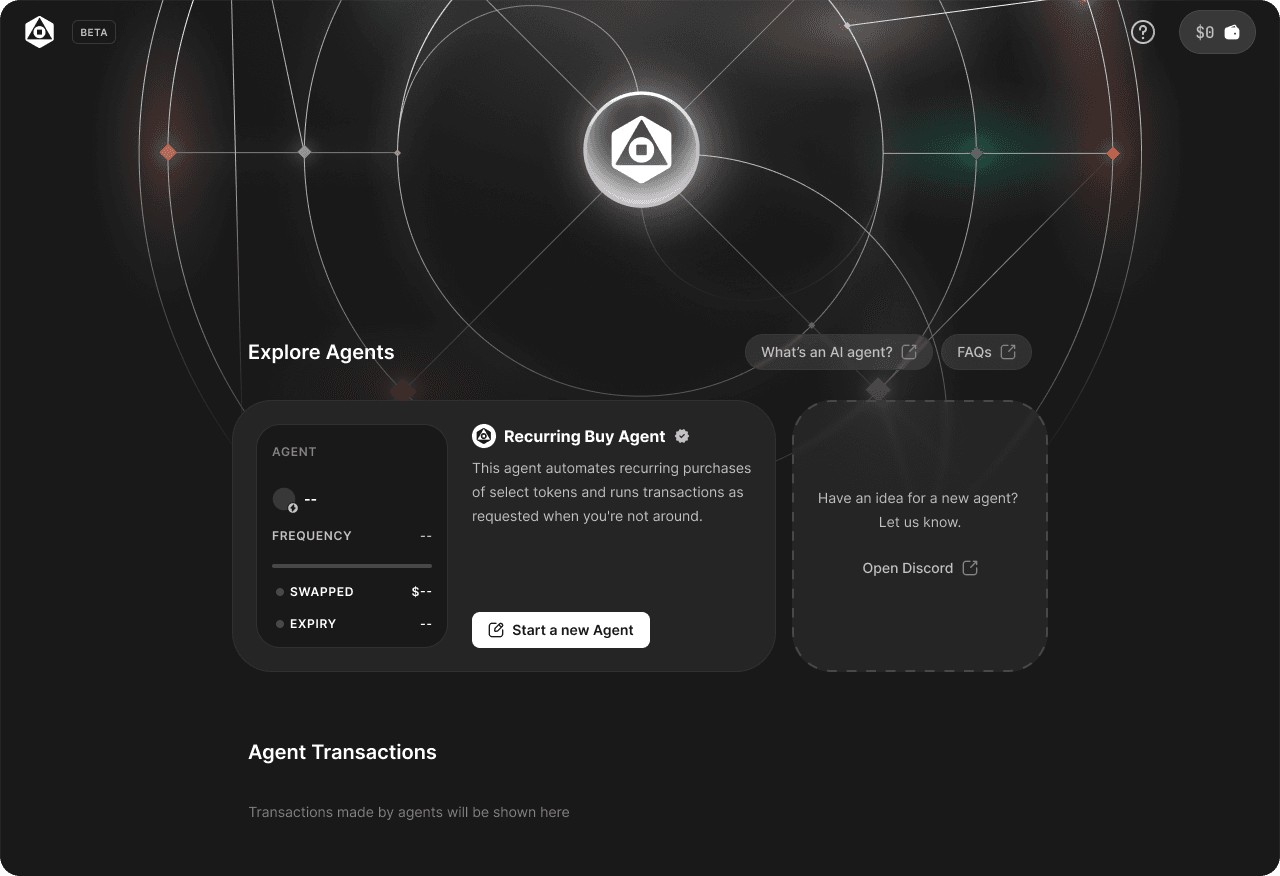
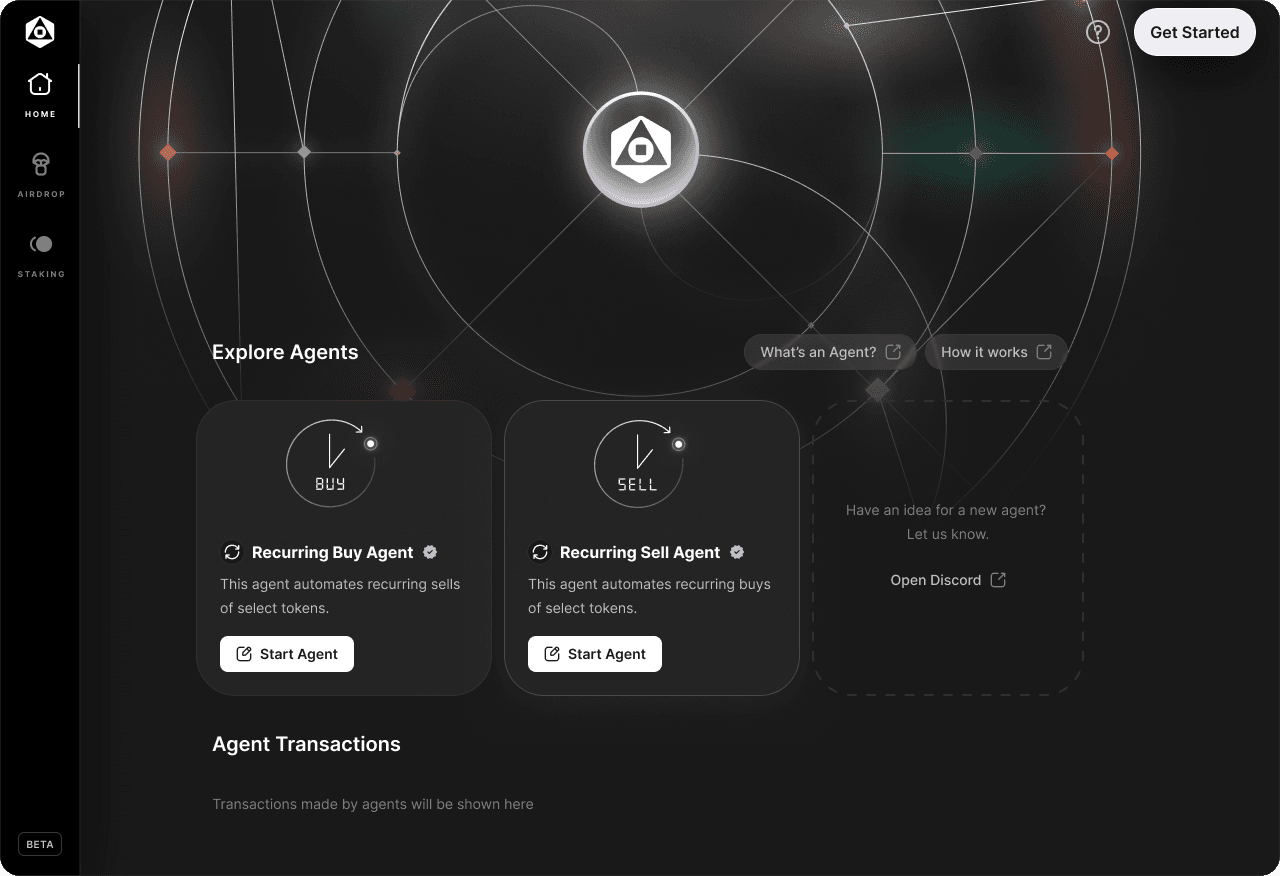
Design with scalability: while our MVP supports only one agent at a time, I designed with the future state in mind — where we’ll have multiple agents and need to support additional features like airdrops and staking post-TGE.
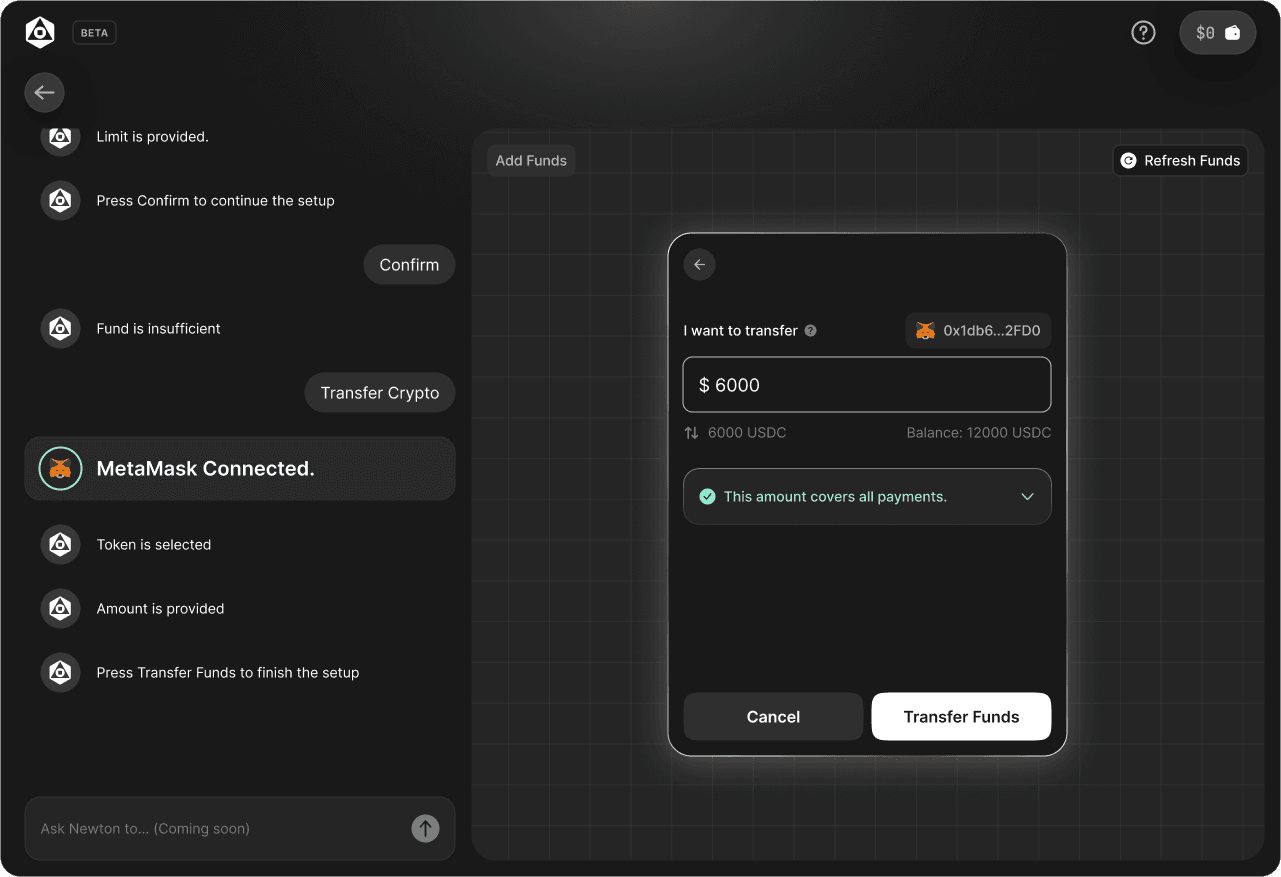
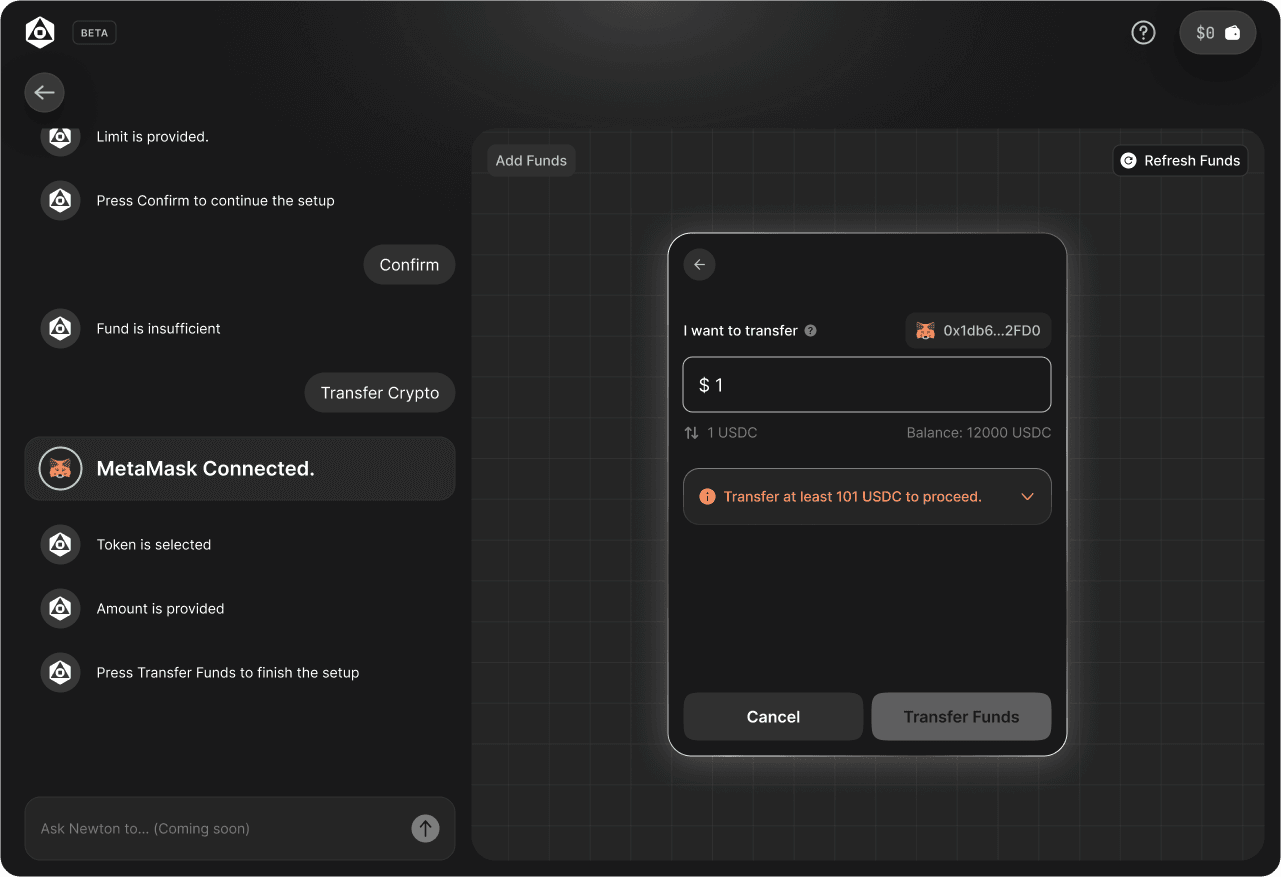
Design with simplicity: instead of showing all fees up front, I designed a dynamic feedback that tells users how many automated transactions can be covered by the amount they enter.
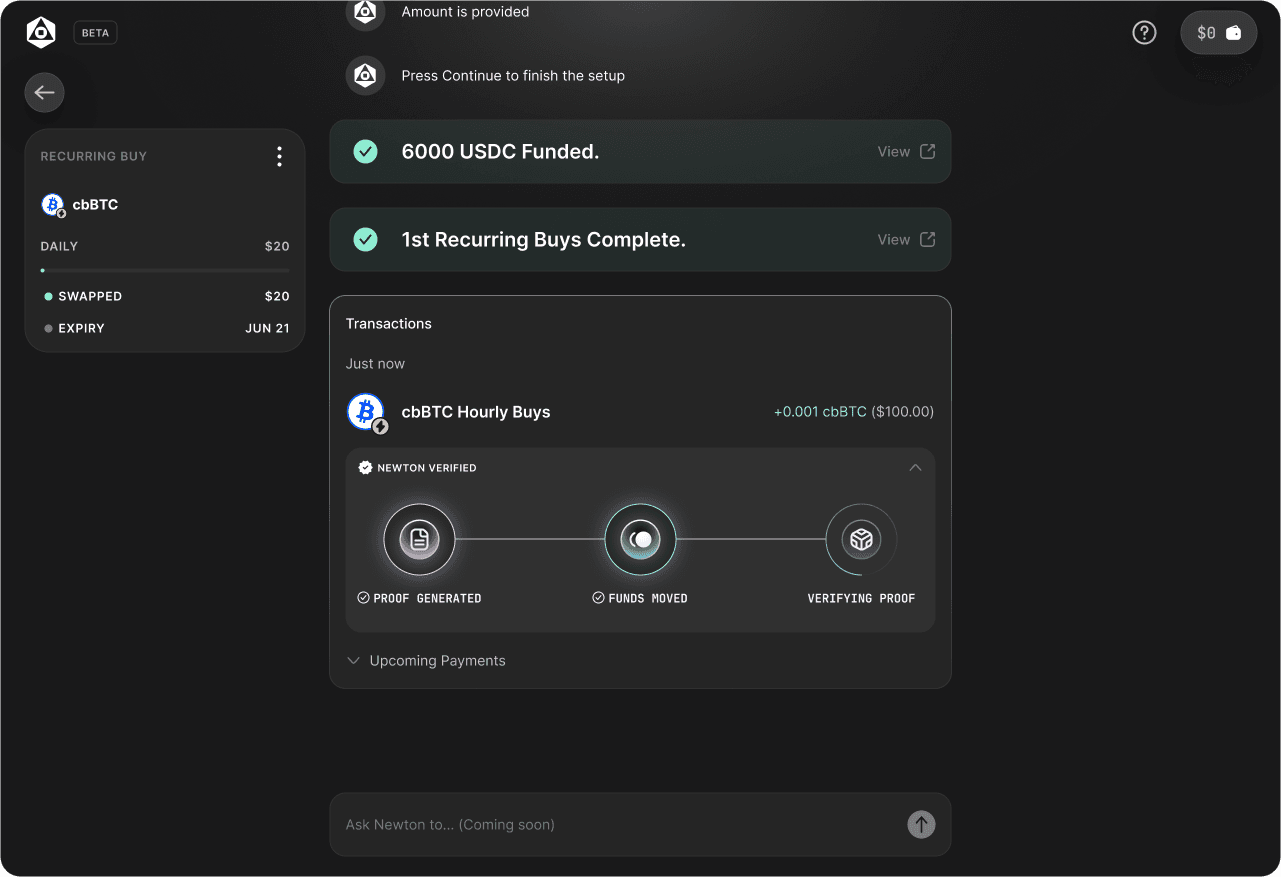
Design with transparency: since Newton acts as a trust layer for verifying agentic transactions, we surface a detailed tracker that shows when funds were moved and whether each transaction was verified.
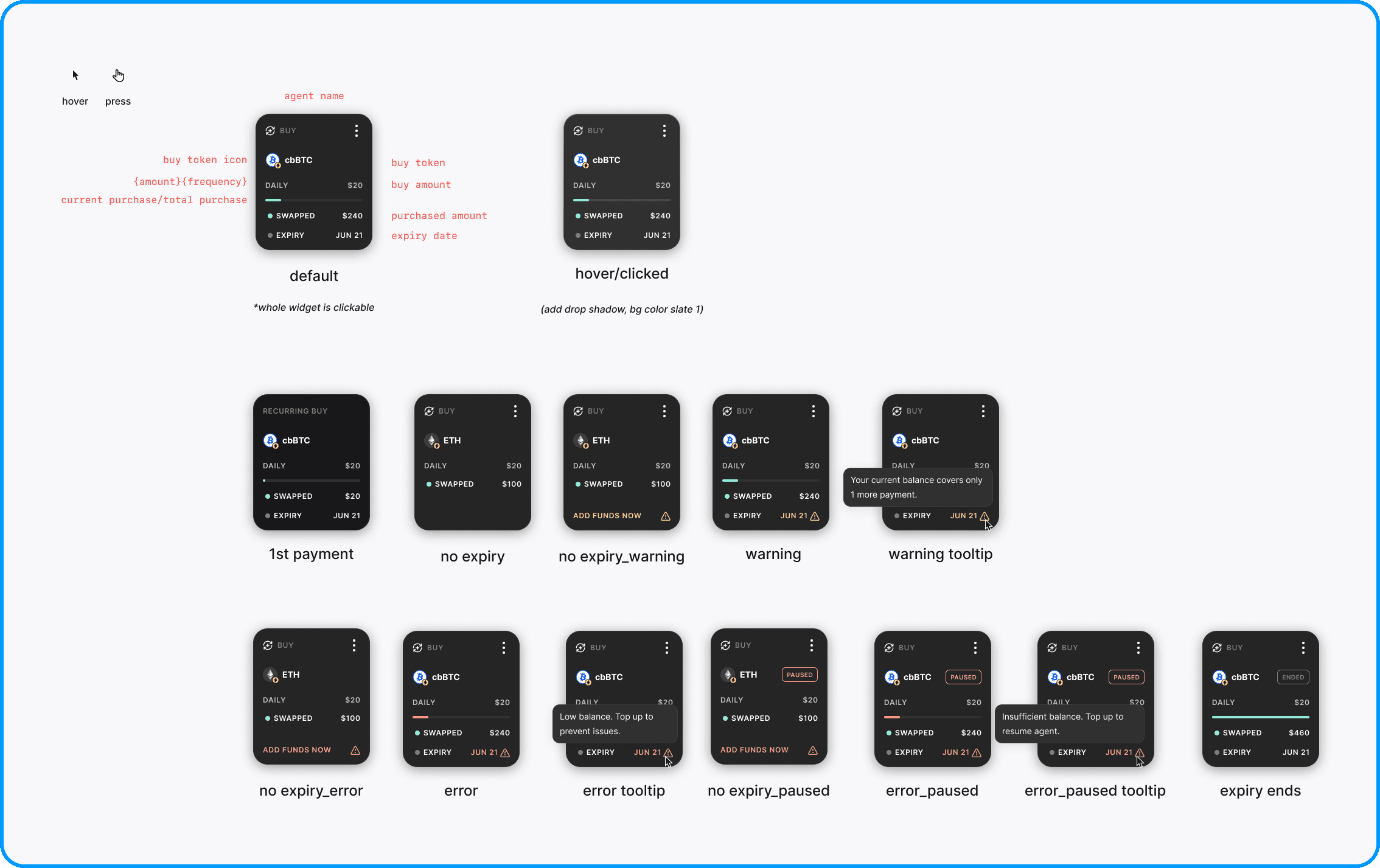
As part of the design handoff, I put together a design document for engineering to showcase the different variations of the widget designs.
What I learned
Aligning on the why early is crucial when designing in emerging tech.
Even highly technical products benefit from emotional clarity — trust, control, and simplicity.
The design process is meant to be messy — and that is okay. The goal is to drive alignment among different stakeholders, which requires designers to have a strong point of view on both the product experience and the design craft.
Impact
Within two weeks of launch:
$1M+
Total transaction volume
83k
Transactions processed
48k
Agents created
Thanks for stopping by!
Want to learn more about this project? Send me an email